
Men's World Ranking
FIFA World Cup 2026 Format Explained: Everything You Need to Know

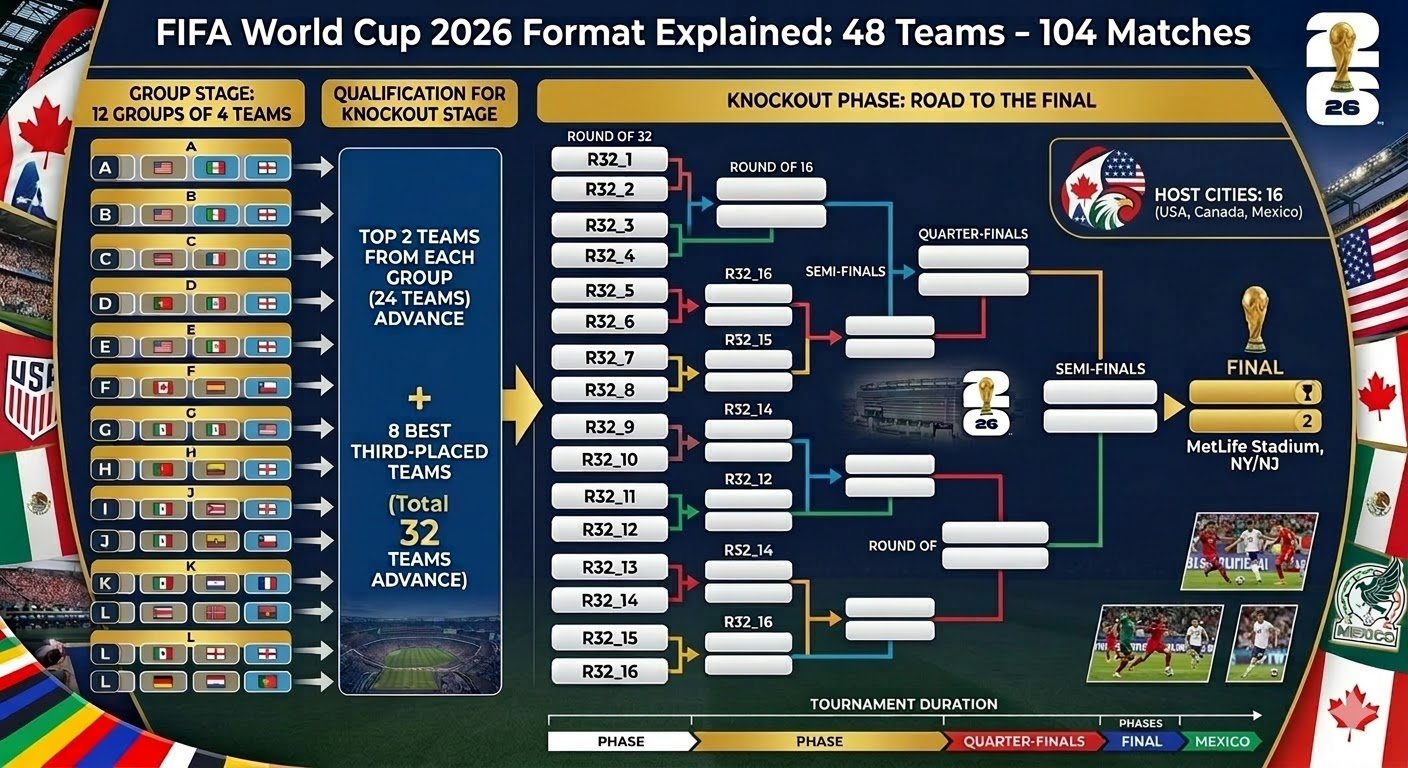
The beautiful game is about to get a massive makeover. If you’ve been following international football for a while, you’re likely used to the classic 32-team setup that has defined the tournament since 1998. However, the upcoming tournament in North America is breaking the mold. Having the FIFA World Cup 2026 format explained is essential for every fan, bettor, and analyst because the changes are not just cosmetic—they fundamentally alter the road to the trophy.
With the expansion to 48 nations, the 2026 edition hosted by the USA, Canada, and Mexico will be the largest in history. This shift isn’t just about more matches; it’s about a broader representation of global talent and a grueling new path to the final. Let’s dive deep into the mechanics of this historic expansion.
Why is the FIFA World Cup Expansion Happening?
Before we get into the “how,” we must understand the “why.” FIFA’s decision to move from 32 to 48 teams was driven by a desire to make the World Cup more inclusive. By increasing the number of participants, more countries from Africa, Asia, and North America get a realistic shot at competing on the world stage.
This expansion means more FIFA World Cup qualifiers drama and more opportunities for “underdog” stories that fans love. From a commercial standpoint, more teams mean more matches, more tickets, and a massive boost in global broadcasting revenue.
The New 48-Team Structure: A Massive Leap
The core of the FIFA World Cup 2026 format explained revolves around the jump to 48 teams. Initially, there was a proposal for 16 groups of three teams, but football fans and purists raised concerns about potential collusion in the final group games.
Listening to the feedback, FIFA officially confirmed a much more exciting structure:
-
Total Teams: 48 (Up from 32)
-
Total Matches: 104 (Up from 64)
-
Tournament Duration: 39 Days
-
Finalists’ Matches: 8 (Instead of the traditional 7)
This increase to 104 matches is a 60% jump in total games, making it a marathon of football across the North American continent.
Group Stage Revolution: 12 Groups of Four
The most significant update in the FIFA World Cup 2026 format explained is the return to groups of four. Instead of the risky three-team group idea, FIFA settled on 12 groups of four teams each.
How the Group Stage Works:
-
The top two teams from each of the 12 groups will automatically qualify for the knockout stage.
-
The eight best third-placed teams will also advance.
-
This ensures that the “drama of the final day” remains intact, as teams fight to be among the top third-place finishers.
This system is similar to the current UEFA Euro format but on a much larger scale. It reduces the risk of teams playing for a specific result to eliminate a third rival, keeping the integrity of the World Cup group stage alive.
The Introduction of the Round of 32
Because 32 teams will now emerge from the group stage (24 top-two finishers + 8 best third-place teams), a completely new knockout round has been added.
Previously, the knockout phase started with the Round of 16. In 2026, we will see the debut of the Round of 32. This adds an extra layer of intensity and an additional game for the teams that reach the final. For the players, this means the physical demand will be higher than ever, requiring deep squads and excellent rotation.
Allocation of Slots: Who Benefits the Most?
A major part of the FIFA World Cup 2026 format explained is seeing which continents gain the most from the 48-team expansion. FIFA has redistributed the slots to ensure a more global representation.
| Confederation | Old Slots (32 Teams) | New Slots (48 Teams) |
| AFC (Asia) | 4.5 | 8.5 |
| CAF (Africa) | 5 | 9.5 |
| CONCACAF (N. America) | 3.5 | 6.5 |
| CONMEBOL (S. America) | 4.5 | 6.5 |
| OFC (Oceania) | 0.5 | 1.5 |
| UEFA (Europe) | 13 | 16 |
Note: The “.5” represents a spot in the Intercontinental Play-off tournament.
Asia and Africa are the biggest winners here, nearly doubling their guaranteed representation. This makes the FIFA World Cup 2026 qualifiers in these regions incredibly competitive.
Host Cities and Logistics: A Continental Challenge
Hosting a 48-team tournament across three massive countries—USA, Canada, and Mexico—presents a logistical puzzle. The FIFA World Cup 2026 host cities are divided into three regions (West, Central, and East) to minimize travel for teams and fans.
-
United States: 11 cities (including New York, Los Angeles, and Miami).
-
Mexico: 3 cities (Mexico City, Guadalajara, Monterrey).
-
Canada: 2 cities (Toronto, Vancouver).
The MetLife Stadium in New Jersey has been selected to host the Final, while the legendary Estadio Azteca in Mexico City will host the opening match. Teams will likely stay within their assigned regions during the group stages to avoid cross-continental flights every three days.
Impact on Player Welfare and Club Football
With the tournament lasting 39 days and finalists playing 8 games, player fatigue is a hot topic. The FIFA World Cup 2026 format requires a mandatory rest period for players before the tournament begins.
Club managers in the Premier League, La Liga, and elsewhere are watching closely. The extended schedule means players will return to their clubs later, potentially affecting the start of the 2026-27 domestic seasons. For the fans, however, it simply means a longer summer of non-stop football.
Tactical Shifts: How Teams Will Adapt
When we look at the FIFA World Cup 2026 format explained from a tactical lens, the “best third-place” rule changes everything. In the 32-team format, losing your first game often meant you were 80% likely to go home.
In 2026, a team could potentially lose two games and still squeeze into the Round of 32 if they have a strong goal difference or a high-scoring win in their third match. Expect to see:
-
Conservative Play: Lower-ranked teams playing for a draw to secure that crucial point for third-place rankings.
-
Attacking Bursts: Teams in the final 15 minutes of group games pushing for goals to improve their “Best 3rd” standing.
-
Squad Depth: The extra knockout round makes the bench just as important as the starting XI.
Conclusion: A New Era for Football
The FIFA World Cup 2026 format explained reveals a tournament that is bigger, bolder, and more inclusive than ever before. While the move to 48 teams brings logistical challenges and a longer schedule, it opens the door for nations that have only ever dreamed of playing on the world stage.
From the 12 groups of four to the introduction of the Round of 32, every match will carry immense weight. As the road to 2026 continues through the qualifiers, the excitement is only going to build. Whether you are a fan of the giants like Brazil and France or rooting for an emerging nation from Asia or Africa, the 2026 World Cup promises to be an unforgettable spectacle.
Frequently Asked Questions (FAQs)
1. How many teams qualify for the 2026 World Cup?
A total of 48 teams will qualify for the 2026 tournament, which is an increase of 16 teams from the previous 32-team format used since 1998.
2. How many games will be played in total?
The tournament will feature 104 matches, up from 64 matches in 2022. This increase is due to the larger number of groups and the addition of the Round of 32 knockout stage.
3. Will all three host countries qualify automatically?
Yes, USA, Canada, and Mexico will all qualify automatically as hosts. Their slots are taken from the CONCACAF allocation.
4. How do the “best third-place teams” qualify?
After all group matches are finished, the 12 teams that finished 3rd in their groups are ranked by points, goal difference, and goals scored. The top 8 teams from this list advance to the Round of 32.
5. Where will the FIFA World Cup 2026 Final be held?
The 2026 Final will be held at MetLife Stadium (New York/New Jersey) on July 19, 2026.
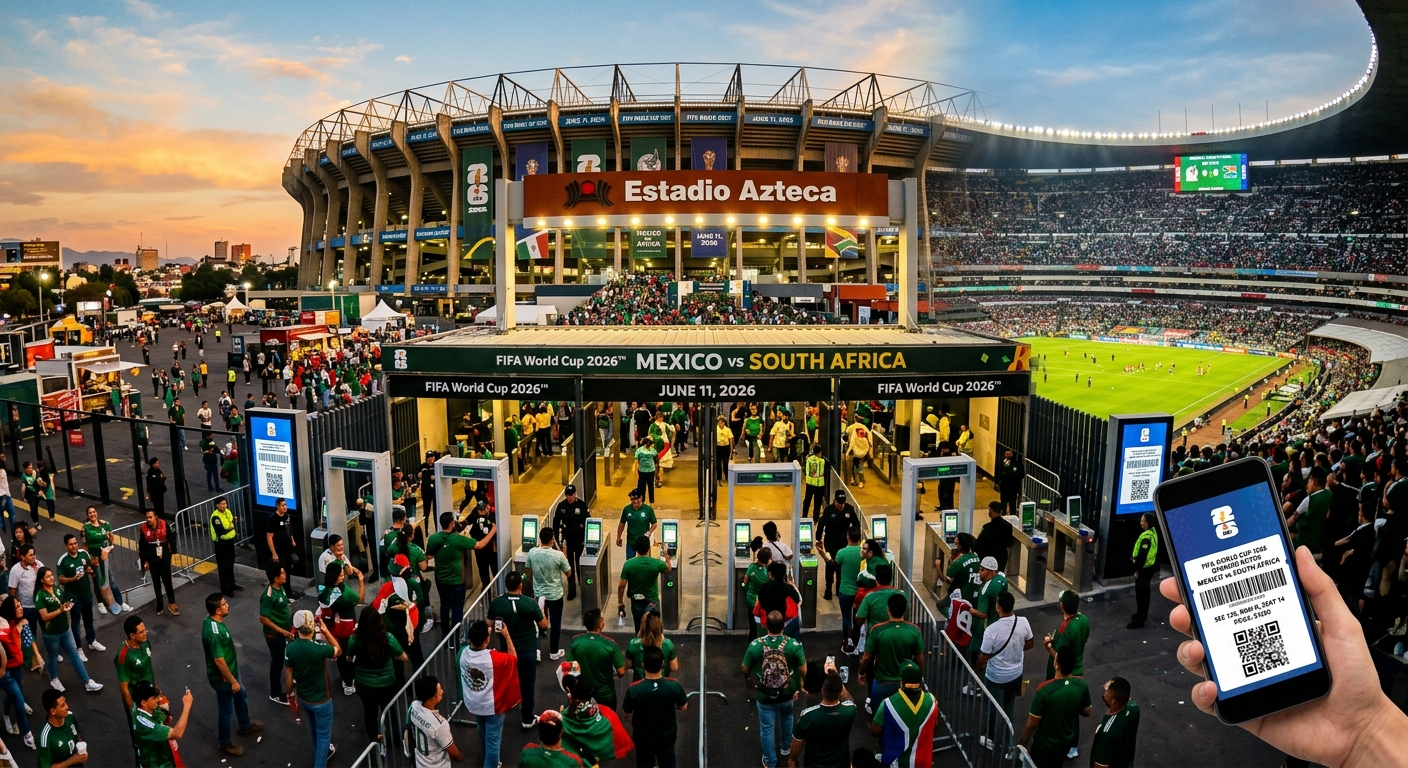
The upcoming opening match of the FIFA World Cup 2026 on June 11, 2026, at the legendary Estadio Azteca in Mexico City features a highly anticipated clash between Mexico and South Africa. This spectacular event places immense pressure on global digital transaction infrastructures. Millions of football fans concurrently look to secure a spot inside the stadium, causing secondary ticket exchanges to command a premium, with entry points starting at approximately $1,260 depending on seat selection.
Securing these entries smoothly depends entirely on modern software architecture. From official hubs to resale channels, the consumer experience is shaped by specialized software features engineered to withstand catastrophic load spikes, prevent automated scalping routines, and provide flawless graphical user interfaces. For software companies, analyzing these mechanisms offers a unique look into high-performance web engineering.
Scalability and Concurrency Control in Ticketing Engines
When high-profile sports tournaments launch public sales phases, ticketing servers encounter transactional volume levels that would instantly crash typical e-commerce applications. The technical solution relies heavily on microservices architecture combined with dynamic cloud auto-scaling tools. Official hubs like the FIFA Official Tickets portal deploy cloud-native configurations that isolate separate user paths. When traffic surges, the system automatically spins up independent server containers to process distinct tasks such as payment verification, seat locking, and database updates.
To keep applications responsive during peak windows, development teams utilize virtual waiting room architectures powered by token bucket algorithms. These software platforms distribute cryptographic queue tokens to incoming connections, processing customer requests sequentially while protecting the core database from write conflicts. For developers seeking to optimize high-concurrency platforms, checking out the judionline808 website 1 software features and platform guide offers deep technical insights into handling large user inflows without experiencing systemic latency or database deadlocks.
Anti-Fraud Algorithms and Mobile Tokenization Software Features
The competitive secondary marketplace introduces a massive security hurdle: fraudulent resales and malicious automated bots. To counter this, resale marketplaces such as Viagogo and StubHub implement rigid anti-bot software modules within their edge computing layers. These security software features utilize real-time behavior analysis, machine learning classifications, and unique device fingerprinting to differentiate actual human sports fans from automated ticket-scraping scripts designed to bulk-buy seats. If a connection attempts to poll a pricing endpoint multiple times a second, cloud security rules instantly challenge the request.
Furthermore, physical ticket fraud is eliminated through dynamic barcode tokenization technologies embedded inside mobile applications. Instead of receiving static, easily duplicated PDF files, buyers access their match entry codes via a dedicated app. The application generates a rotating QR code that refreshes every few seconds using secure time-based one-time password algorithms. This ensures that the pass remains securely tethered to the legitimate buyer’s device profile. For a broader look at digital platform management and secure ecosystem design, browsing resources like fifaworld.co.uk provides helpful background on tournament portals.
Interactive Seating Maps and GIS Rendering Engine Features
A crucial element of user retention on modern ticketing platforms involves the visual rendering of the venue. Platforms like SeatGeek stand out due to their graphic-heavy user interfaces that map thousands of coordinate points seamlessly on mobile screens. The software features behind these complex seating charts rely on highly optimized vector graphics (SVG) and Geographic Information System (GIS) frameworks adapted for indoor architectures.
Instead of displaying a flat, static layout of Estadio Azteca, the client-side rendering engine presents an interactive, three-dimensional preview taken from the exact section selected. The application calculates the precise sightline angle, distance to the pitch, and relative value scoring based on real-time historical transaction data. Understanding how complex interactive frameworks optimize front-end code performance is a major trend among application engineers today, similar to the web development concepts highlighted in the guide detailing exploring macan808jp online and modern software features. When a user zooms into specific stadium areas, the underlying rendering API seamlessly manages individual data nodes without triggering a full page refresh.
Key Takeaways
High-concurrency auto-scaling and virtual token queues prevent server crashes during high-demand event launches.
Dynamic mobile tokenization and behavior-based anti-bot security protect physical ticket inventory from duplication.
SVG and GIS mapping engines empower interactive seat previews, giving consumers real-time 3D sightline visualizations prior to checkout.
API Integration Across Secondary and Premium Channels
Managing unified seating inventory across multiple independent secondary marketplaces requires robust, low-latency application programming interfaces (APIs). When a fan lists an entry for resale on an exchange like StubHub, that data field must synchronize across alternative digital aggregators instantly to prevent double-selling anomalies. Software engineers utilize RESTful APIs paired with asynchronous message brokers like Apache Kafka to broadcast database mutations across global nodes within milliseconds.
Premium ticket offerings, including FIFA Hospitality packages, require deeper corporate enterprise resource planning (ERP) system integrations. These specialized software features link luxury skybox inventories directly with external logistics engines, catering networks, and hospitality groups. The moment a premium package transaction is finalized, the database triggers automated webhooks that book local hotel rooms and arrange private stadium transportation concurrently. This integrated structure guarantees that regardless of whether a customer utilizes fan-to-fan resale web channels or luxury corporate suites, the central inventory ledger remains perfectly synchronized.
Technical Support Infrastructure and User Retention
Even the most optimized digital ticketing system will encounter point-of-sale failures if its technical support software features cannot handle transaction conflicts under heavy load. High-volume transactional applications integrate automated ticketing systems, conversational AI tools, and live helpdesk escalation paths to resolve purchasing anomalies instantly. For instance, if a third-party payment gateway encounters a network timeout while a user is completing a checkout, intelligent customer relationship management (CRM) systems immediately reserve the selected seats for a specific safety window while guiding the consumer through an alternative checkout method.
This proactive approach to technical support directly mirrors the operational engineering frameworks observed in major enterprise environments. For example, analyzing specialized operational models like the Aer Lingus tech support and customer service guide highlights how system redundancy, cloud backends, and multi-channel communication pipelines keep consumers supported during high-stakes booking processes. Seamless support mechanisms minimize shopping cart abandonment and preserve brand loyalty in highly competitive industries.
Engineering the Future of Sports Ticketing Platforms
As the countdown to the June opening fixture continues, the borderless logistics behind this massive tournament highlight the ultimate triumph of modern web application engineering. Fans searching globally for mexico vs south africa tickets are interacting with millions of lines of highly sophisticated computer code, distributed server meshes, and ultra-secure encryption modules. Every underlying microservice, from database sharding routines to edge-cached seat validation scripts, works in complete harmony to deliver an authentic, safe, and accessible global sports entertainment experience.
Conclusion
Ultimately, the digital infrastructure behind international sports ticketing demonstrates how sophisticated software features redefine user experiences. By blending cloud auto-scaling, dynamic security protocols, and interactive spatial rendering, modern platforms protect consumers while maximizing transaction speeds. As fans finalize their matchday plans, the smooth operation of these complex technologies ensures that global attention remains entirely on the pitch, proving that robust software is the true foundation of modern entertainment sporting events.
Frequently Asked Questions
What software prevents bots from buying up high-demand match tickets?
Marketplaces use advanced web application firewalls and behavioral analysis software features. Platforms like StubHub and Viagogo employ machine learning models that scan device fingerprints and mouse movements to block automated extraction scripts instantly.
How do interactive seating maps render without slowing down my browser?
Interactive charts utilize scalable vector graphics (SVG) combined with edge-cached geometric coordinates. Ticketing web apps download static stadium assets once, using lightweight WebSockets to stream real-time price updates without forcing full page updates.
What happens in the backend database if two fans click the same seat simultaneously?
Ticketing engines execute an optimistic locking mechanism in the database. The software locks the specific seat row and number for the first user who initiates the checkout call, holding it for a designated time window until the transaction completes.
Why do modern digital sports passes use dynamic refreshing barcodes?
Dynamic barcodes protect tickets from fraud and duplication. Software engines use time-based cryptographic algorithms to rotate the barcode data every few seconds, making static screenshots completely invalid at the stadium gates.
How do resale platforms keep ticket listings synchronized across multiple web channels?
Marketplaces use high-throughput RESTful APIs and event-driven message brokers like Apache Kafka. Any change in ticket availability or price triggers a background event that synchronizes across all connected distribution channels within milliseconds.
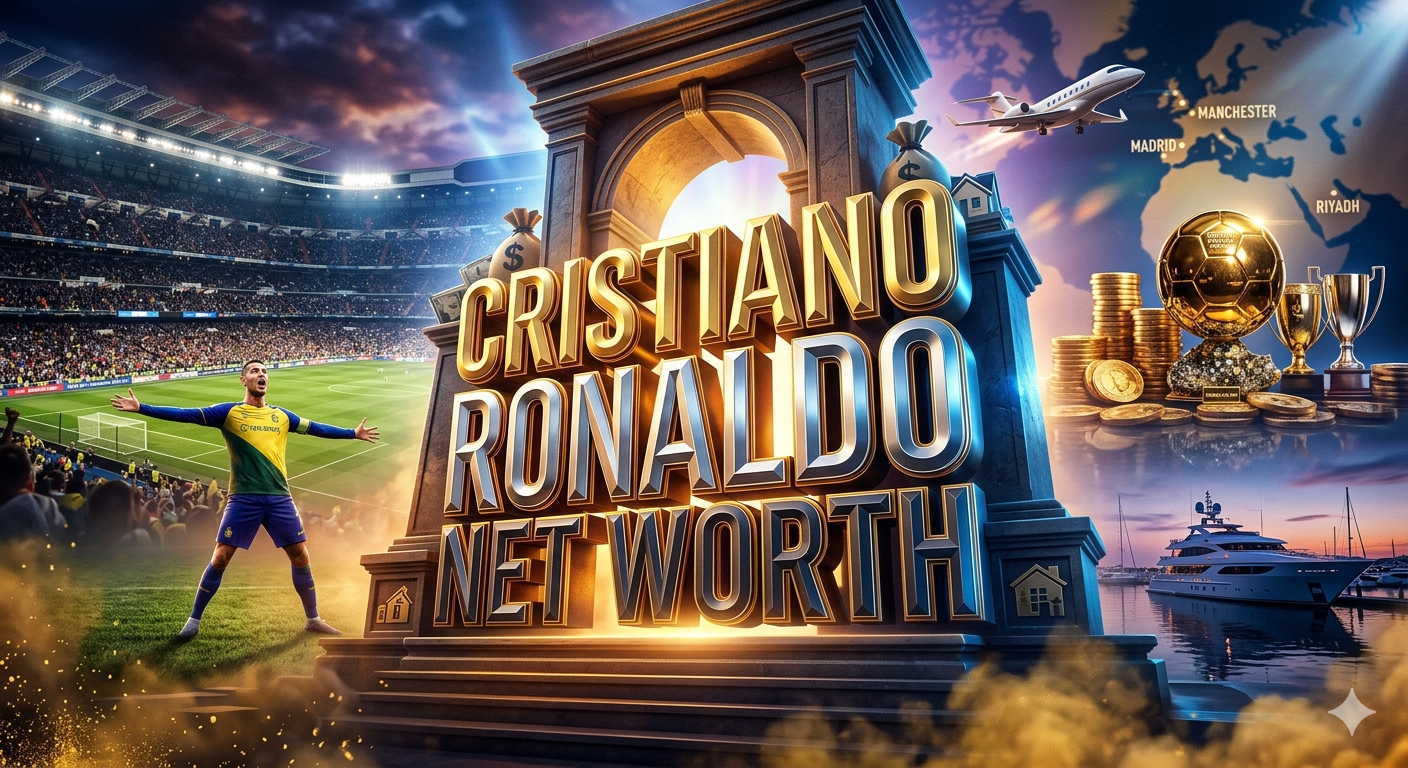
When Cristiano Ronaldo made the seismic move to Al-Nassr in Saudi Arabia, the footballing world didn’t just witness a transfer; it witnessed the birth of the highest-paid athlete era in history. But to understand the true Cristiano Ronaldo net worth, one must look far beyond his weekly paycheck. We are looking at a walking, breathing conglomerate.
As of 2026, Cristiano Ronaldo’s estimated net worth sits comfortably between $850 million and $1.1 billion, with total career earnings having long surpassed the $2 billion mark.
He isn’t just a striker; he is a global financial entity. While most athletes see their value drop as they enter their late 30s and 40s, Ronaldo has inverted the curve. Through a combination of the “Saudi Premium,” a lifetime Nike deal, and a sprawling portfolio of hotels and clinics, the CR7 brand is more liquid today than it was during his peak years at Real Madrid.

The Saudi Arabian Windfall: A Contract Like No Other
The most significant contributor to his current liquid wealth is his historic contract with Al-Nassr. When he signed the deal in early 2023, it redefined the economics of sports.
-
Annual Salary: Approximately $215 million (£173m).
-
Commercial Agreements: His deal includes image rights and acting as an ambassador for Saudi Arabia’s 2034 World Cup bid.
-
Total Package: When all incentives are factored in, Ronaldo is earning roughly $4.1 million per week.
This contract didn’t just pad his bank account; it provided the capital necessary to scale his private investments without touching his core wealth.
Career Earnings: The Path to a Billion
Before the desert sun of Riyadh, Ronaldo built his fortune in Europe’s most elite leagues. Each move was a calculated step in increasing his market value.
1. The Manchester United & Real Madrid Years
At Real Madrid, Ronaldo became the highest-paid player in the world multiple times. His salary hovered around $30–$40 million annually, but it was his on-field performance that fueled his off-field endorsements. During this decade, he became the first footballer to cross the $100 million annual earnings threshold.
2. The Juventus “Value Add”
His move to Italy wasn’t just about football; it was about tax efficiency and brand expansion. Juventus paid him roughly $34 million a year, but the “Ronaldo Effect” saw the club’s share price skyrocket and shirt sales break records within 24 hours.
The Pillar of Endorsements: The Lifetime Nike Deal
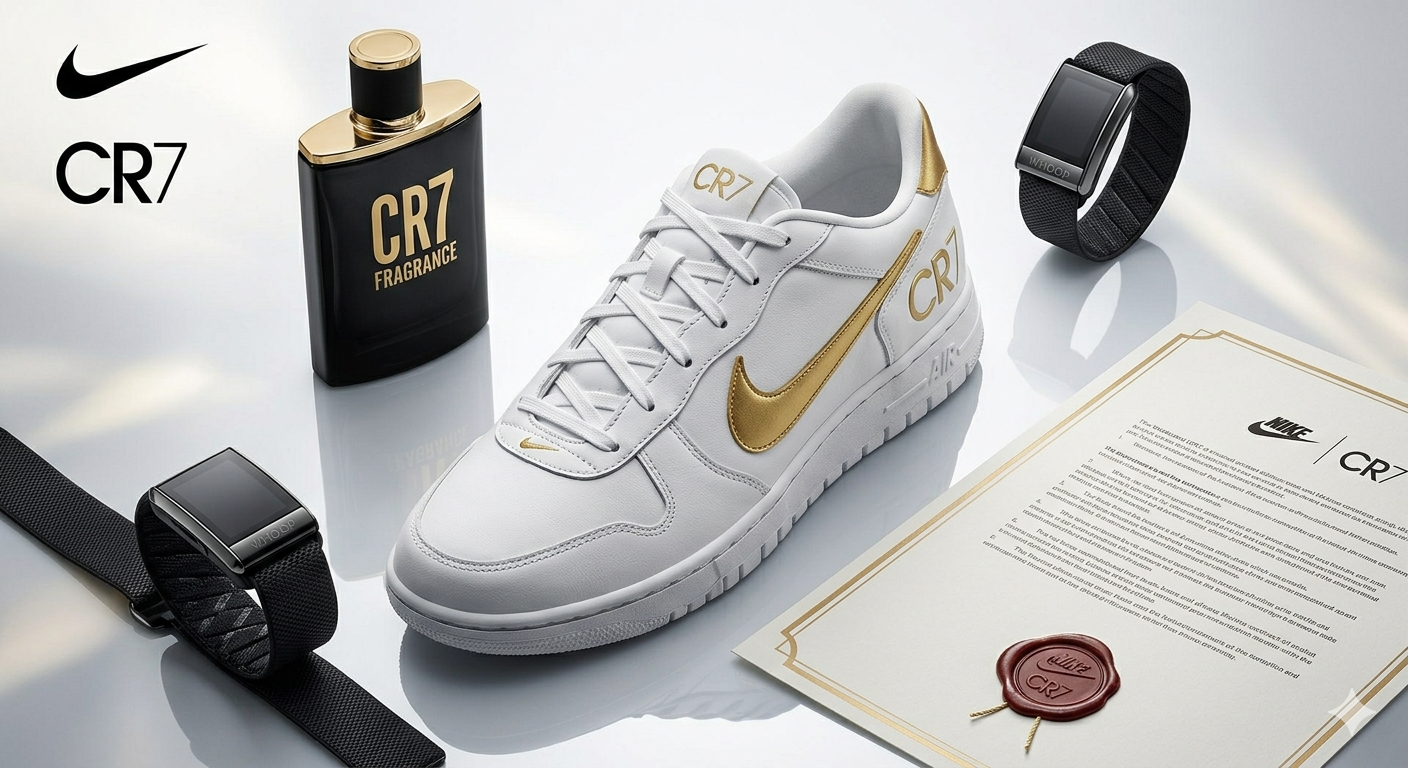
Ronaldo is one of only three athletes—alongside Michael Jordan and LeBron James—to sign a lifetime contract with Nike. Valued at over $1 billion, this deal ensures a steady stream of revenue regardless of whether he is scoring goals or sitting in a boardroom.
Key Partners in the CR7 Portfolio:
-
Herbalife: A long-standing nutrition partnership.
-
Binance: Capitalizing on the digital asset and NFT space.
-
Clear Haircare: Dominating the grooming sector in Asian and European markets.
-
Whoop: His latest venture into high-tech fitness wearables.
The Pillar of Endorsements: The Lifetime Nike Deal
The CR7 Business Empire: Beyond the Pitch
Ronaldo is notoriously obsessed with his post-retirement legacy. Unlike many legends who rely on coaching or punditry, Ronaldo is building a tangible business empire.
Pestana CR7 Hotels
In partnership with the Pestana Hotel Group, Ronaldo owns luxury hotels in Lisbon, Funchal, Madrid, New York, and Marrakech. These aren’t just vanity projects; they are high-occupancy assets located in prime real estate zones.
Insparya Hair Clinics
One of his most profitable “quiet” businesses is his stake in Insparya, a hair transplant clinic group with dozens of locations across Spain, Portugal, and Italy. As the face of the brand, he has destigmatized the procedure, turning it into a multi-million dollar annual revenue generator.
CR7 Lifestyle Brand
From CR7 Underwear and Eyewear to Fragrances, his retail footprint is global. By controlling the manufacturing and distribution of his own merchandise, he keeps a significantly higher percentage of the profits compared to traditional licensing deals.
Digital Gold: The King of Social Media ROI
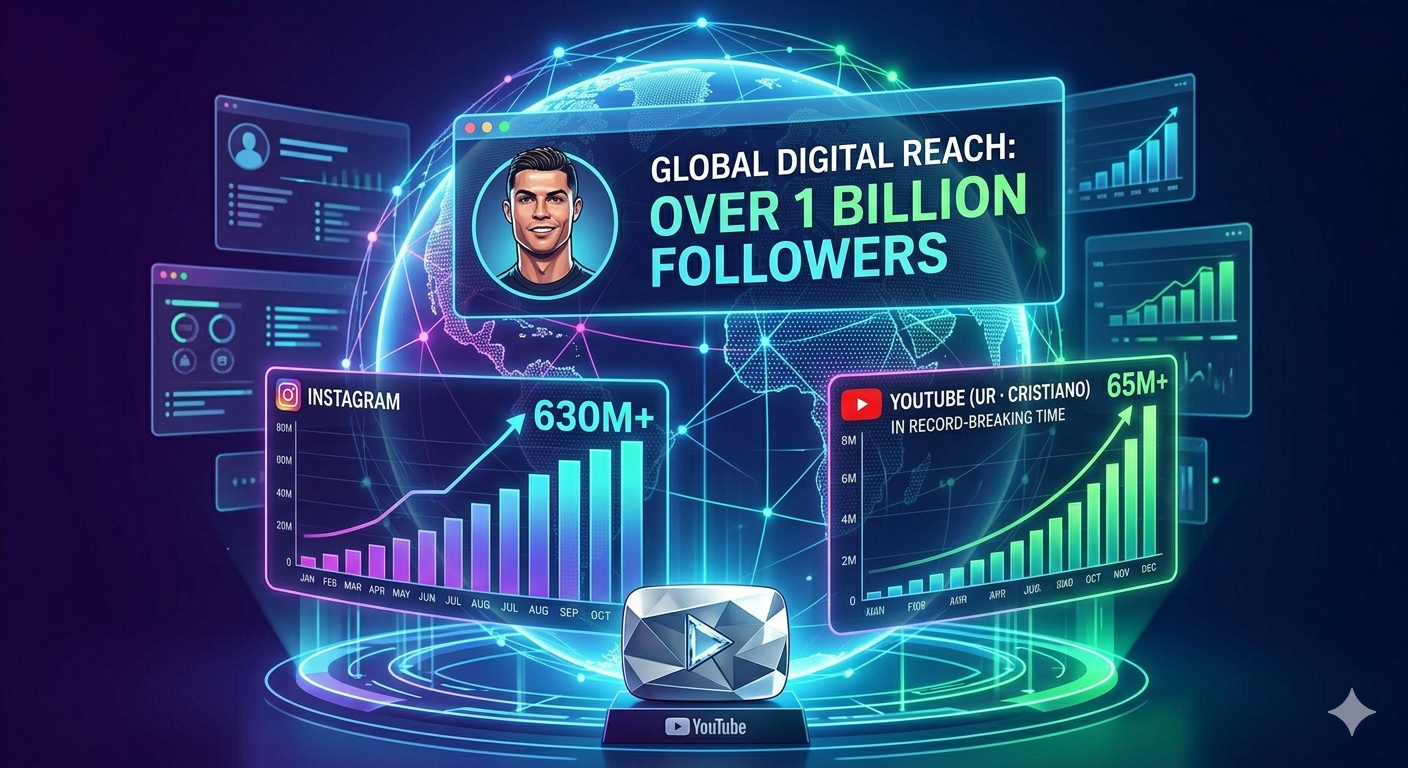
You cannot discuss his net worth without discussing his 500+ million Instagram followers.
-
Price Per Post: Industry experts estimate that a single sponsored post on Ronaldo’s Instagram costs between $2.5 million and $3.5 million.
-
YouTube Dominance: His recent launch of the “UR · Cristiano” YouTube channel broke world records for the fastest-growing subscriber count, adding an estimated $5–$10 million in annual ad revenue and sponsorship opportunities almost overnight.
Ronaldo is the world’s most effective “Influencer.” He provides brands with a direct line to nearly 10% of the Earth’s population.
Luxury Assets: Where the Money Goes
A man with a billion-dollar net worth lives a life reflected in his assets. Ronaldo’s “lifestyle” portfolio is worth over $100 million alone.
The Car Collection
He owns one of the most expensive private car collections in the world, including:
-
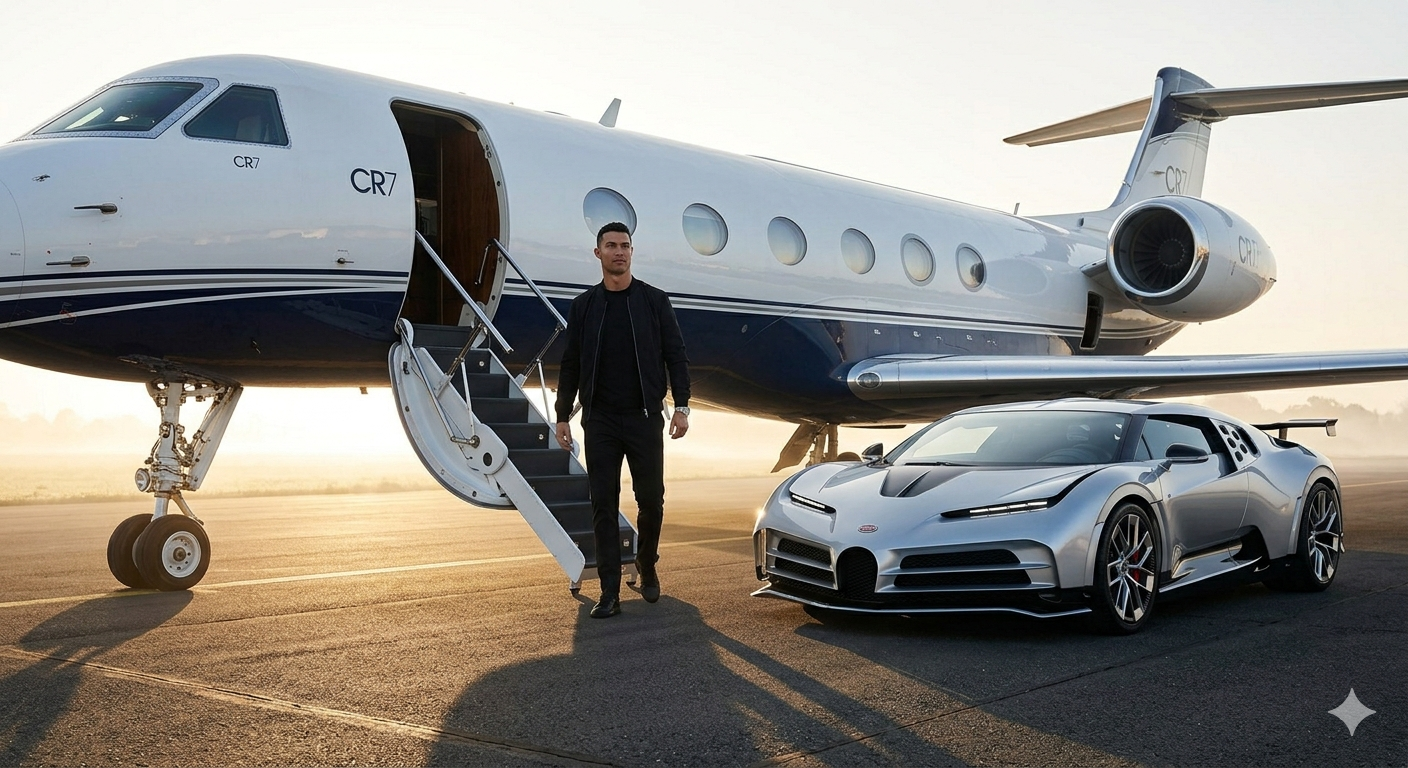
Bugatti Centodieci (1 of 10 in the world) – Valued at $9 million.
-
Bugatti Chiron & Veyron.
-
Rolls-Royce Dawn & Phantom.
-
Ferrari Monza SP2.
Real Estate
-
The Lisbon Penthouse: The most expensive apartment ever sold in Portugal.
-
Madrid Mansion: A futuristic villa in the exclusive La Finca neighborhood.
-
New York Trump Tower Apartment: A luxury suite with views of Central Park.
-
Riyadh Residence: A high-security luxury mansion provided as part of his Al-Nassr stay.
Private Aviation
Ronaldo owns a Gulfstream G650, valued at roughly $65 million, capable of flying 10-19 passengers across the globe in total luxury.
Philanthropy: The Impact of Wealth
While often criticized for his vanity, Ronaldo’s financial contributions to charity are massive. He famously sold his 2013 Ballon d’Or trophy for over $600,000 to donate to the Make-A-Wish Foundation. He has also donated millions to hospital systems in Portugal and children’s relief funds in Syria and Palestine.
Is He a Billionaire?
The short answer is yes. While “Net Worth” often includes illiquid assets (like buildings and future earnings), Ronaldo’s total career compensation crossed the billion-dollar mark years ago. When you combine his real estate, hotel equity, and lifetime Nike deal, he is firmly entrenched in the billionaire’s club.
| Income Stream | Estimated Annual Value |
| Al-Nassr Salary | $200M+ |
| Nike Lifetime Deal | $30M – $50M |
| Social Media Sponsored Posts | $100M+ |
| CR7 Brand (Hotels, Gyms, Fashion) | $50M+ |
| Total Estimated Annual Income | $380M – $420M |
Pro Tip for Investors & Fans
Ronaldo’s financial success is built on Diversification. He never relied solely on his football salary. For anyone looking to build long-term wealth, the CR7 model shows the importance of building a “Personal Brand” that exists independently of your primary 9-to-5 job.
Frequently Asked Questions (FAQ)
1. How much does Cristiano Ronaldo earn per second?
Based on his $200 million annual salary, Ronaldo earns approximately $6.34 every single second, whether he is awake or asleep.
2. Who is richer, Messi or Ronaldo?
As of 2026, Ronaldo generally ranks higher in total net worth and annual income. While Messi has a massive deal with Inter Miami and Adidas, Ronaldo’s “Saudi Premium” and his larger business portfolio give him a slight financial edge.
3. Does Ronaldo own a private jet?
Yes, Ronaldo owns a Gulfstream G650. He previously owned a G200 but upgraded to the G650 to accommodate his growing family and business needs.
4. What is the most expensive thing Ronaldo owns?
Aside from his business equity, his most expensive personal asset is likely his $65 million Gulfstream private jet or his rare $9 million Bugatti Centodieci.
5. How much does he make from Instagram?
Ronaldo is the highest-paid person on Instagram, earning upwards of $3 million per sponsored post. This income alone exceeds the yearly salary of most top-tier Premier League players.
The countdown to the greatest show on Earth has entered its final stretch. For the first time in history, three nations—the United States, Canada, and Mexico—are joining forces to host a tournament of unprecedented scale. If you are planning to follow your team across North America, understanding the FIFA World Cup 2026 Host Cities & Stadiums Guide is your first step toward an organized and unforgettable experience.
With 48 teams competing in 104 matches across 16 world-class venues, this World Cup isn’t just a tournament; it’s a continental festival. From the high altitude of Mexico City to the coastal breezes of Vancouver and the soaring skylines of New York, each host city offers a unique flavor of football culture. In this deep-dive guide, we break down every stadium, the regional clusters designed to save you travel time, and the iconic venues where history will be made.
The 16 Host Cities: A Triple-Nation Map
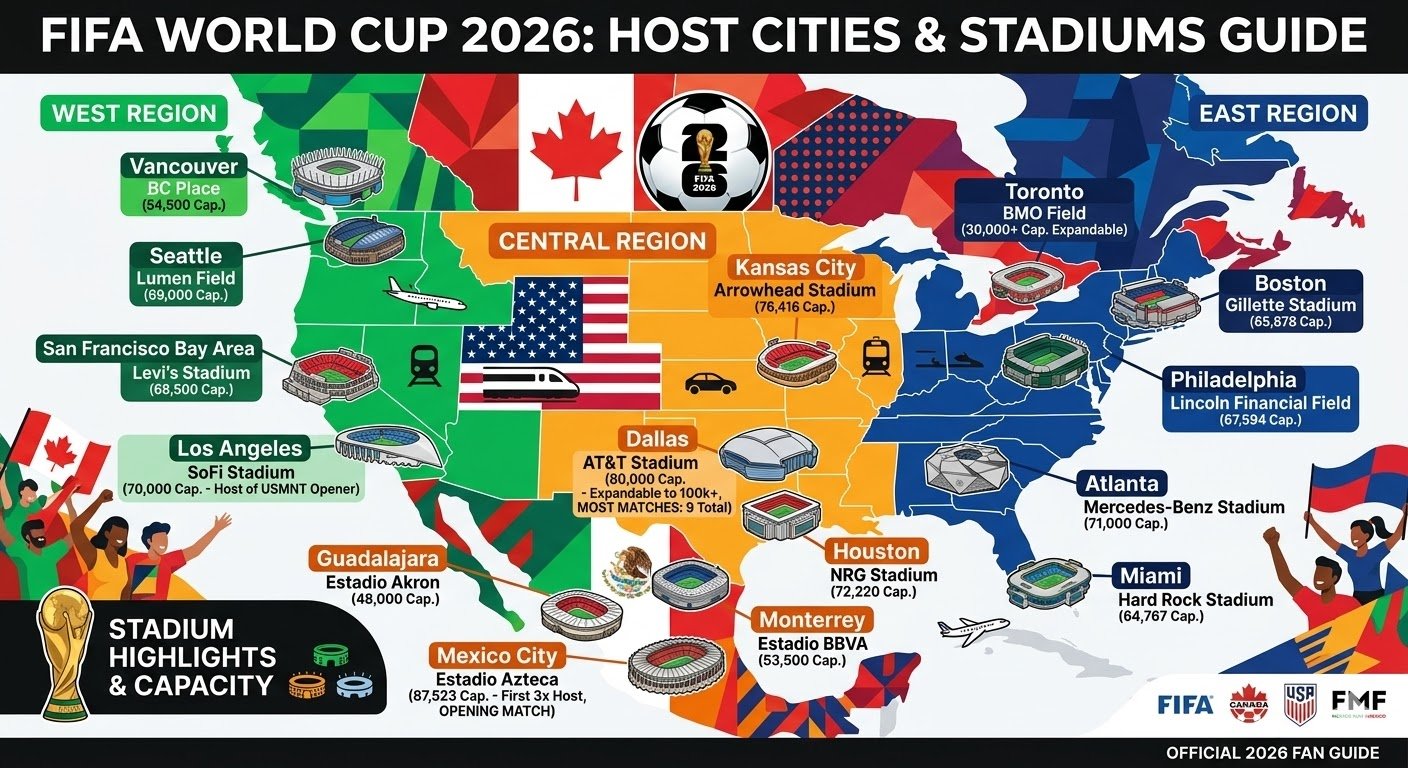
FIFA has strategically selected 16 cities to ensure that the tournament remains accessible while showcasing the diversity of North American infrastructure. These cities are categorized into three regional zones: West, Central, and East. This “clustering” system is designed to minimize travel for teams and fans during the group stages.
Western Region
-
Vancouver, Canada: BC Place
-
Seattle, USA: Lumen Field
-
San Francisco Bay Area, USA: Levi’s Stadium
-
Los Angeles, USA: SoFi Stadium
Central Region
-
Guadalajara, Mexico: Estadio Akron
-
Mexico City, Mexico: Estadio Azteca
-
Monterrey, Mexico: Estadio BBVA
-
Kansas City, USA: Arrowhead Stadium
-
Dallas, USA: AT&T Stadium
-
Houston, USA: NRG Stadium
Eastern Region
-
Toronto, Canada: BMO Field
-
Boston, USA: Gillette Stadium
-
Philadelphia, USA: Lincoln Financial Field
-
Miami, USA: Hard Rock Stadium
-
Atlanta, USA: Mercedes-Benz Stadium
-
New York/New Jersey, USA: MetLife Stadium
Detailed Breakdown of the Iconic Stadiums
The stadiums selected for 2026 are some of the most technologically advanced and historically significant arenas in the world. Let’s look at the heavy hitters in our FIFA World Cup 2026 Host Cities & Stadiums Guide.
Estadio Azteca (Mexico City) – The Temple of Football
No stadium in this guide carries more weight than the Estadio Azteca. In 2026, it will become the first stadium to host matches in three different World Cups (1970, 1986, and 2026).
-
Capacity: 87,523
-
Key Event: The Opening Match (June 11, 2026).
-
Vibe: Steeped in history, this is where Pele and Maradona cemented their legacies. Expect a high-intensity atmosphere at 7,350 feet above sea level.
MetLife Stadium (New York/New Jersey) – The Final Destination
Located just across the river from the Manhattan skyline, MetLife Stadium has been chosen to host the FIFA World Cup 2026 Final.
-
Capacity: 82,500
-
Key Event: The World Cup Final (July 19, 2026).
-
Vibe: A massive, modern bowl that thrives on the energy of the New York metropolitan area. It is the pinnacle of the tournament’s journey.
AT&T Stadium (Dallas) – The High-Tech Hub
Affectionately known as “Jerry World,” AT&T Stadium is a marvel of modern engineering. It will host the most matches of any stadium in this tournament—nine in total.
-
Capacity: 94,000 (Expandable)
-
Key Event: Semi-final match.
-
Vibe: Featuring a retractable roof and one of the world’s largest HD video screens, this venue provides a futuristic viewing experience.
SoFi Stadium (Los Angeles) – The $5.5 Billion Masterpiece
The most expensive stadium ever built, SoFi Stadium is an indoor-outdoor hybrid that looks like something out of a sci-fi movie.
-
Capacity: 70,000
-
Key Event: USA’s opening match.
-
Vibe: Located in the heart of the entertainment capital, the acoustics and the “Oculus” double-sided video board are designed for maximum spectacle.
Traveling Between Cities: The Logistics Challenge
When using this FIFA World Cup 2026 Host Cities & Stadiums Guide, fans must realize the sheer distances involved. Traveling from Vancouver to Miami is a 3,400-mile trip—longer than a flight from London to Cairo!
To help fans, FIFA is implementing Regional Clustering:
-
Group Stage Logic: Teams in Group A might play exclusively in the Western cluster (e.g., LA, Seattle, Vancouver) to avoid 6-hour cross-country flights.
-
Climate Shifts: You could go from 30°C humidity in Houston to a cool 15°C evening in Toronto. Pack layers!
-
Public Transport: While cities like New York, Toronto, and Mexico City have robust subway systems, US cities like Dallas and Kansas City will rely heavily on ride-sharing and dedicated shuttle buses to the stadiums.
Stadium Renovations: Getting “FIFA Ready”
Many of the NFL stadiums in the USA currently use synthetic turf. However, FIFA requirements mandate natural grass pitches.
-
NRG Stadium (Houston) and Mercedes-Benz Stadium (Atlanta) are installing high-tech natural grass systems specifically for 2026.
-
BMO Field (Toronto) is undergoing a massive expansion, adding temporary seating to boost its capacity above the 45,000 mark required for World Cup hosting.
-
BC Place (Vancouver) is receiving a lighting and hospitality upgrade to meet the “commercially clean” standards FIFA demands.
Sustainable Hosting: The Green Initiative
A core part of the FIFA World Cup 2026 Host Cities & Stadiums Guide is the commitment to sustainability.
-
Levi’s Stadium (San Francisco) is a leader in eco-friendly design, featuring a 27,000-square-foot green roof.
-
Lincoln Financial Field (Philadelphia) generates much of its own power through 11,000 solar panels and 14 wind turbines located around the stadium.
-
FIFA aims for this to be the first “Net Zero” World Cup, encouraging fans to use carbon-offset programs when booking their multi-city flights.
Conclusion: Plan Your Trip Early
The FIFA World Cup 2026 Host Cities & Stadiums Guide makes one thing clear: this tournament is massive. Whether you are chasing the historical aura of Estadio Azteca or the futuristic luxury of SoFi Stadium, the sheer scale of North America means that “winging it” is not an option.
Start by choosing a regional cluster that fits your favorite team or your budget. Booking accommodation in “Hub Cities” like Dallas or Atlanta—which have major international airports and multiple match dates—can save you thousands in travel costs. The world is coming to North America in 2026; make sure you’re ready for the kickoff!
Frequently Asked Questions (FAQs)
1. Which stadium has the highest capacity for the 2026 World Cup?
While AT&T Stadium in Dallas can be expanded to hold nearly 100,000 fans, the Estadio Azteca and MetLife Stadium are officially listed as the largest primary venues with capacities exceeding 82,000 and 87,000 respectively for the tournament.
2. Can I travel between host cities by train?
In the Eastern Cluster (New York, Philadelphia, Boston), Amtrak’s Acela train is a great option. However, for Central and Western cities, flying is the only practical way to travel due to the vast distances.
3. Will all matches be played on natural grass?
Yes. FIFA mandates that all matches must be played on natural grass pitches. Stadiums that usually use artificial turf (like SoFi, Mercedes-Benz, and Lumen Field) are installing temporary natural grass systems for the duration of the tournament.
4. Which city will host the most matches?
Dallas (AT&T Stadium) is the big winner for 2026, hosting a total of nine matches, including a high-profile semi-final.
5. How do I get to the stadiums from the city centers?
Most host cities are launching “FIFA Fan Shuttles.” While cities like Vancouver, Toronto, and Mexico City have stadiums near city centers, many US stadiums (like Gillette in Foxborough or AT&T in Arlington) are further out, so plan for 45-60 minute travel times.
Maximize your fun: What to know about Neosurf Casino Australia 2026’s game features
How to maximize your experience at New Online Casino Canada 2026: A guide for
The best pokies to try at Online Casino Australia 2026: Explore top titles and

FIFA Login: Complete Guide to Access Your FIFA Account Securely

The Ultimate Guide to Adventureppctop.com Business License: Transparency and Compliance in Digital Advertising

Contact DesignMode24 Com: Features and Support Guide
-
 FIFA world Cup3 months ago
FIFA Login: Complete Guide to Access Your FIFA Account Securely
-
Business6 months ago
The Ultimate Guide to Adventureppctop.com Business License: Transparency and Compliance in Digital Advertising
-
 Blog4 months ago
Contact DesignMode24 Com: Features and Support Guide
-
 FIFA world Cup4 months ago
Ticketing Software Features for World Cup 2026 Openers
-

 FIFA world Cup3 months ago
City Sports Near Me: The Complete Guide to Finding Local Athletic Activities
-

 Blog5 months ago
Beyond the Buttons: under growth games uggcontroman controller Controller Philosophy
-
 Business5 months ago
TopTM Uncovered: The Master Framework for Elite Team Management and High-Performance Systems
-

 FIFA world Cup4 months ago
Saudi Football Squad: Strategy, New Coach, & World Cup Ambitions