
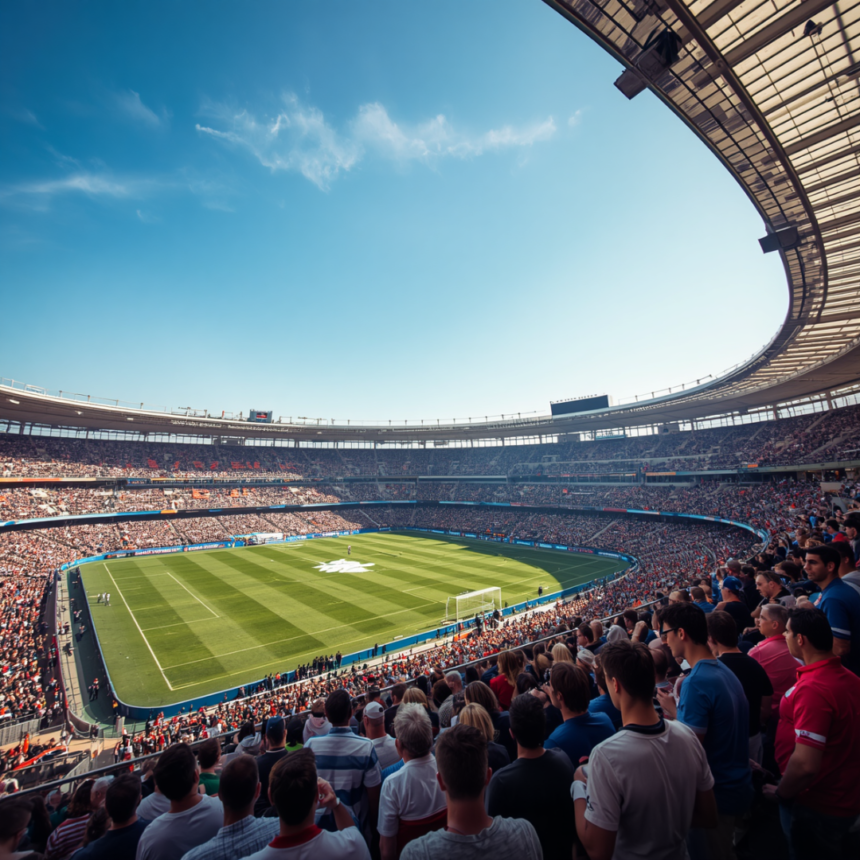
The San Francisco Bay Area is no stranger to the global spotlight, but in the summer of 2026, the intensity is reaching a fever pitch. As one of the premier host venues for the FIFA World Cup 2026™, Levi’s Stadium—temporarily rebranded as San Francisco Bay Area Stadium for the tournament—is set to host six pivotal matches.
- The Road to 2026: Levi’s Stadium as a World Cup Hub
- Official Schedule: Levi’s Stadium World Cup Games
- Inside the Venue: Capacity and Configuration
- Logistics: Getting to the Games
- The Fan Experience Beyond the Stadium
- Economic Impact and Cultural Legacy
- Frequently Asked Questions (FAQs)
- 1. How can I buy tickets for the World Cup games at Levi’s Stadium?
- 2. Will the San Francisco 49ers still play during the World Cup?
- 3. Is there a bag policy for FIFA World Cup matches?
- 4. What is the best place to stay for fans attending matches?
- 5. Are the World Cup games at Levi’s Stadium outdoor?
- Conclusion: A Historic Moment for Silicon Valley
Whether you’re a local die-hard or a traveling supporter flying into SFO, this guide breaks down everything you need to know about the fixtures, the venue upgrades, and how to navigate the Silicon Valley soccer fever.
Key Takeaways: FIFA 2026 at Levi’s Stadium
-
Total Matches: 6 (5 Group Stage games and 1 Round of 32 knockout).
-
Key Teams: High-profile nations including Brazil, France, Germany, and Spain will be featured in the Bay Area.
-
Tournament Dates: Matches at Levi’s Stadium run from June 13 to July 1, 2026.
-
Venue Name: For FIFA compliance, the venue will be officially referred to as “San Francisco Bay Area Stadium.”
-
Upgrades: A $200 million renovation has integrated 4K video boards, Wi-Fi 6, and pitch-side enhancements to meet FIFA’s elite standards.
The Road to 2026: Levi’s Stadium as a World Cup Hub
When the 49ers first opened the gates of Levi’s Stadium in 2014, the vision was always bigger than just American football. Built in the heart of Santa Clara, the venue was designed to be a “smart stadium,” reflecting the technological prowess of its Silicon Valley neighbors.
Fast forward to 2026, and that tech-first approach is being put to the ultimate test. Unlike many other global venues that require massive structural overhauls, Levi’s Stadium was already “soccer-ready” in many ways, having hosted the Copa América Centenario and numerous International Champions Cup matches. However, the FIFA World Cup is a different beast entirely.
The $200 Million Transformation
To ensure the venue remains at the cutting edge of the “Beautiful Game,” ownership has poured $200 million into upgrades. These aren’t just cosmetic; they focus on the “fan-first” experience:
-
Connectivity: Upgraded Wi-Fi 6 and 5G infrastructure to handle the massive data demands of 71,000 fans streaming and sharing content simultaneously.
-
Visuals: New, ultra-high-resolution 4K video boards that are among the largest in any soccer-specific configuration.
-
Hospitality: Renovation of luxury suites and the introduction of semi-permanent hospitality zones to accommodate FIFA’s global corporate partners.
Official Schedule: Levi’s Stadium World Cup Games
The Bay Area has been gifted a diverse and thrilling slate of matches. From European powerhouses to rising stars from the AFC and CAF, the variety ensures every matchday offers a unique cultural flavor.
| Match Date | Match Type | Expected Matchup/Group | Kickoff Time (Local) |
| June 13, 2026 | Group Stage | Qatar vs. Switzerland (Group B) | 12:00 PM |
| June 16, 2026 | Group Stage | Austria vs. Jordan (Group J) | 9:00 PM |
| June 19, 2026 | Group Stage | UEFA Path C Winner vs. Paraguay (Group D) | 9:00 PM |
| June 22, 2026 | Group Stage | Jordan vs. Algeria (Group J) | 8:00 PM |
| June 25, 2026 | Group Stage | Paraguay vs. Australia (Group D) | 7:00 PM |
| July 1, 2026 | Round of 32 | Winner Group D vs. 3rd Place B/E/F/I/J | 5:00 PM |
Note: Match timings and specific group outcomes are subject to FIFA’s final adjustments closer to the tournament start.
Why These Matchups Matter
The inclusion of Jordan and Qatar brings a strong Middle Eastern presence to Santa Clara, while the Paraguay vs. Australia clash on June 25th is expected to be a high-energy battle for knockout positioning. The Round of 32 game on July 1st is the crown jewel of the Bay Area’s schedule, representing the first “win or go home” moment for the local fans.
Inside the Venue: Capacity and Configuration
For the World Cup, the “San Francisco Bay Area Stadium” will operate at a capacity of approximately 71,000. While the stadium’s standard NFL capacity is roughly 68,500, FIFA’s unique seating requirements and the removal of certain commercial barriers allow for a slight expansion.
Pitch and Surface Requirements
One of the most significant changes involves the grass. FIFA mandates a specific type of natural turf that can withstand the rigors of back-to-back games. Levi’s Stadium already uses a hybrid Bermuda grass, but for the World Cup, a new, world-class drainage and heating system has been installed to ensure the pitch remains pristine regardless of the NorCal summer heat.
Sustainability: The Greenest Stage
True to its Silicon Valley roots, Levi’s Stadium is the first professional football stadium in the U.S. to achieve LEED Gold certification. During the World Cup, the stadium will utilize its 27,000-square-foot green roof (the NRG Solar Terrace) and recycled water systems to minimize the environmental footprint of the six games.
Logistics: Getting to the Games
Navigating the Bay Area on a normal day is a challenge; during a World Cup, it requires a tactical plan. The stadium is located in Santa Clara, roughly 40 miles south of San Francisco.
Public Transportation Options
-
VTA Light Rail: This is the most direct way to get to the gates. The Great America Station drops fans off right in front of the stadium.
-
Caltrain: Fans staying in San Francisco or the Peninsula can take Caltrain to the Mountain View station and transfer to the VTA Light Rail.
-
ACE Trains: Ideal for fans coming from the East Bay or Central Valley.
Airport Access
-
San Jose Mineta International (SJC): Only 6 miles from the stadium. This is the preferred hub for those wanting to stay close to the action.
-
San Francisco International (SFO): Approximately 30-45 minutes away without traffic.
-
Oakland International (OAK): A viable alternative, especially for those utilizing the BART/VTA connection.
Pro Tip: FIFA and local authorities highly discourage driving to the stadium on match days. If you must drive, pre-booking parking is mandatory via the official FIFA World Cup 2026 parking portal. Expect parking fees to range from $75 to $125 during the tournament.
The Fan Experience Beyond the Stadium
While the 90 minutes on the pitch are the main event, the World Cup is a month-long festival. The Bay Area Host Committee has been working tirelessly to ensure the spirit of the tournament is felt from the Golden Gate Bridge to the Tech Museum.
FIFA Fan Festival™
While the official location is often finalized in the months leading up to the opener, Civic Center Plaza in San Francisco is the frontrunner for the main Fan Festival. Expect:
-
Giant LED screens for every World Cup game.
-
Local food trucks showcasing the Bay Area’s culinary diversity.
-
Musical performances and interactive soccer clinics.
Santa Clara Fan Zones
For those who want to stay closer to the venue, the city of Santa Clara is planning “Fan Zones” at California’s Great America theme park, located adjacent to the stadium. This allows families to combine a day of rollercoasters with the excitement of a World Cup matchday.
Economic Impact and Cultural Legacy
Hosting the World Cup isn’t just about sport; it’s a massive economic engine. Projections suggest that the six games in the Bay Area could generate over $500 million in economic activity.
Beyond the dollars, the cultural impact is profound. The San Francisco Bay Area is home to one of the most diverse populations in the United States, with massive communities representing the nations competing. When teams like Mexico, Brazil, or the Philippines (should they qualify in future rounds) play in California, it feels like a home game.
Frequently Asked Questions (FAQs)
1. How can I buy tickets for the World Cup games at Levi’s Stadium?
Tickets are sold exclusively through the FIFA.com/tickets portal. Fans must register for an account and participate in various “random selection draws” (lotteries). Resale is only permitted through FIFA’s official platform to prevent price gouging.
2. Will the San Francisco 49ers still play during the World Cup?
The NFL season typically begins in September, well after the World Cup concludes on July 19. However, the 49ers’ preseason and training camp schedules will be adjusted to allow for the stadium’s transition back to an NFL configuration.
3. Is there a bag policy for FIFA World Cup matches?
Yes. FIFA enforces a strict Clear Bag Policy. Bags must be clear plastic, vinyl, or PVC and not exceed 12″ x 6″ x 12″. Small clutch bags (roughly the size of a hand) are usually permitted but will be subject to manual inspection.
4. What is the best place to stay for fans attending matches?
If you want to be within walking distance, hotels in North Santa Clara (near Great America Parkway) are best. For a more “San Francisco” experience, staying near Union Square or SoMa is recommended, provided you account for the 60-90 minute commute to the stadium on match days.
5. Are the World Cup games at Levi’s Stadium outdoor?
Yes, Levi’s Stadium is an open-air venue. While the Bay Area is famous for its fog, Santa Clara is significantly warmer and sunnier than San Francisco. Fans should prepare for high temperatures during day matches and carry sun protection.
Conclusion: A Historic Moment for Silicon Valley
The 2026 World Cup is more than just another event on the calendar; it is the culmination of the Bay Area’s evolution into a global sports powerhouse. With Levi’s Stadium leading the charge as one of the most advanced venues in the tournament, fans are guaranteed an experience that blends the tradition of world football with the innovation of Northern California.